
The Role of Media in China’s Resilient Authoritarian Rule
- DAZEL DAYRIT
- Dec 18, 2023
- 5 min read

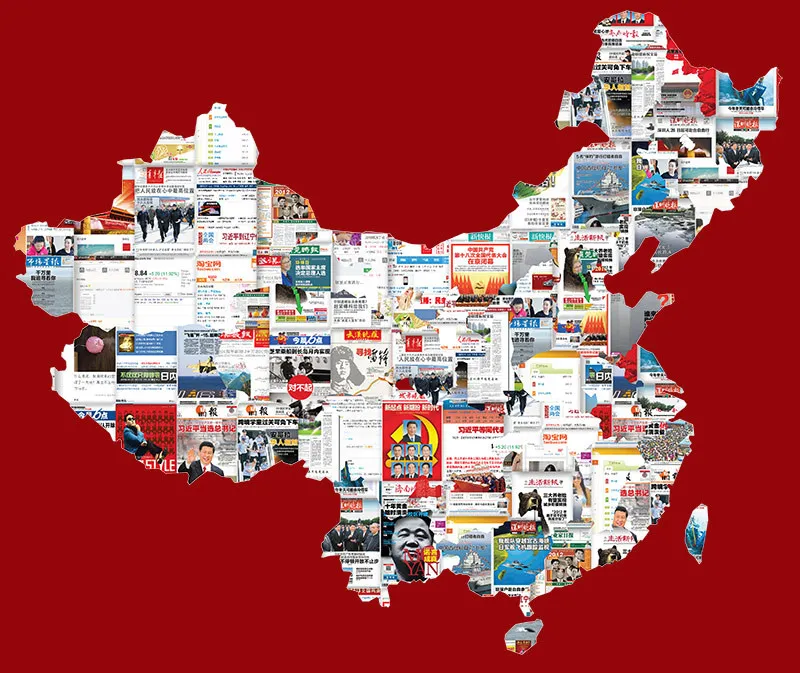
In the world of contemporary Chinese politics, the media emerges as a powerful tool in authoritarian governance. The dynamics of media in China extend far beyond mere information dissemination, delving into the realms of regime legitimacy, public persuasion, and societal engagement. A pivotal lens through which to scrutinize this intricate relationship is provided by Stockmann and Gallagher's seminal work, "Remote Control: How the Media Sustain Authoritarian Rule in China" (2011). This critical analysis delves into key aspects illuminated by Stockmann and Gallagher, unraveling the multifaceted role played by media in sustaining China's authoritarian rule. From the marketized nature of Chinese media, which skillfully crafts convincing narratives, to the subtle biases introduced through labor law reporting, and the consequential influence on citizen participation in the legal system, each dimension offers profound insights into the mechanisms through which media contributes to shaping public perceptions and, consequently, supports the foundations of authoritarian governance in China.
"This study examines the role of the media in sustaining regime stability in an authoritarian context." - Stockmann and Gallagher (2011)
The exploration of media's role in sustaining China's authoritarian rule, as illuminated by Stockmann and Gallagher (2011), examines the role between information dissemination, citizen perceptions, and regime stability. The study breaks away from conventional examinations of authoritarian resilience, extending its gaze to crucial institutions like the media and courts. What emerges is a nuanced understanding of how Chinese media, now marketized, strategically contributes to regime legitimacy and effective governance. Unlike the propagandist "mouthpieces" of the past, contemporary Chinese media strikes a balance between adhering to state censorship and meeting the public's appetite for real-life stories. The concept of "positive propaganda" emerges, steering aggrieved citizens toward the legal system for dispute resolution and rights protection. Furthermore, the paper underscores the tangible impact of media reporting on labor-law-related issues, fostering a pro-worker bias among citizens and inspiring their active involvement in the legal system; shedding light on the dynamics through which the state, leveraging controlled information flow and limited exposure to alternative sources, achieves its political goals in the realm of authoritarian rule (Stockmann and Gallagher, 2011).

With this, I concur with the paper's assertion that despite the evolution brought about by marketization in the delivery of news, the media's content in China remains aligned to the party line. The alignment of media coverage with the perspective of the aggrieved worker in labor disputes, championing an underdog narrative and applauding victories against abusive employers, reflects a calculated approach to shaping public sentiment. The intentional omission of implementation issues is a strategic move, providing legitimizing examples that encourage potential plaintiffs to turn to legal avenues. The observed rise in litigious behavior and the emphasis on "rights protection" indeed signals a transformation in state-society relations (Stockmann and Gallagher, 2011). However, it is essential to recognize that this shift does not necessarily indicate anti-regime sentiment or instability. Instead, it appears to underscore the state's adept navigation toward a more sustainable and stable form of authoritarianism. This nuanced understanding highlights the complexities of media manipulation in shaping perceptions and the subtle dynamics at play in the Chinese sociopolitical landscape.
Despite awareness of state control over the media, the majority of urban Chinese citizens rely on it as a source to understand social issues and legal rights, with a notable susceptibility to media messages, particularly among the moderately informed (Stockmann and Gallagher, 2011). This vulnerability, as pointed out in the paper, may gradually wane over time as individuals accumulate firsthand experiences with the legal system, encountering discrepancies with media portrayals. This insight offered by the paper challenges the common assumption that media, even within a diverse and dynamic press landscape, inherently propels political liberalization. Instead, it sheds light on a counterintuitive reality: a diversifying media can, in fact, play a role in stabilizing the regime by presenting an excessively positive image of the legal system. The escalating sensationalism and sophistication in press coverage, as highlighted, might not erode the strength of the Chinese Communist Party (CCP) but, rather, fortify it by effectively communicating state messages and policy objectives.
The observation that commercial liberalization of the media is not only compatible with authoritarian resilience but could actively contribute to it makes sense in the context of strategic information management. By adapting to market forces while still aligning with state interests, the media serves as a powerful tool for the CCP to consolidate power and maintain stability. This multifaceted relationship between media, political dynamics, and regime resilience underscores the intricate and adaptive nature of authoritarian systems in navigating evolving sociopolitical landscapes.
"In addition, the Chinese Communist Party continues to use other types of authority, including ideological and military, to enforce its position and policy goals." - Stockmann and Gallagher (2011)
Overall, the paper makes notable contributions by expanding the discussion on resilient authoritarianism. Unlike existing research that predominantly focuses on democratic institutions, the paper recognizes the importance of non-democratic institutions, such as the media, in sustaining one-party dominance. It goes beyond the conventional emphasis on media independence and press freedom; and delves into the impact of media on the views of citizens living under authoritarian regimes, challenging the assumption that people's opinions merely reflect the nature of media content in nondemocratic settings. By introducing a dynamic element to the discussion, the paper brings nuance to the understanding of outcomes under authoritarian rule. Instead of limiting the debate to regime stability or liberalization, the paper explores a case where the media is considered a tool for political reform to maintain power. In terms of empirical approach and methodology, the paper employs a mixed-methods approach, combining content analysis of media representations with qualitative interviews and statistical analysis based on a survey. This methodological rigor enhances the depth and reliability of the findings.
However, contextual limitations, due to the paper's focus on China may limit the generalizability of its findings to other authoritarian contexts. The unique political and cultural characteristics of China may not necessarily apply to other authoritarian states, limiting the broader applicability of the study.
Furthermore, the paper acknowledges the difficulties in obtaining suitable survey data and, as a result, relies on media consumption as a proxy for media influence. This methodological choice raises questions about the precision and accuracy of the measurements, as media consumption may not fully capture the complexity of individuals' responses to media content. Moreover, while the paper suggests a link between media content and citizens' views, it is crucial to recognize that correlation does not imply causation. Establishing a causal relationship requires a more nuanced examination, considering other potential confounding variables. The paper predominantly presents a positive relationship between media content and citizens' views under authoritarian rule. While I somehow agree to this notion, I believe a more comprehensive analysis could benefit from exploring potential counterarguments or contradictory evidence, providing a more balanced perspective.
**
References:
Stockmann, D., & Gallagher, M. E. (2011). Remote Control: How the Media Sustain Authoritarian Rule in China. Comparative Political Studies, 44(4), 436-467. https://doi.org/10.1177/0010414010394773


Comments